Source decorative hairline stainless steel sheet for Interior Decoration, Boiler Plate, and Container Plate
Explore 30 listings for decorative hairline stainless steel sheet available in 200 and 300 series grades with cold rolled techniques. Buyers can compare thickness, surface treatments, and customization options from global manufacturers offering stock and OEM services.
Key considerations
Products List




Comprehensive Sourcing Guide
Sourcing Guide for Decorative Hairline Stainless Steel Sheets
Understanding Product Specifications and Surface Finishes
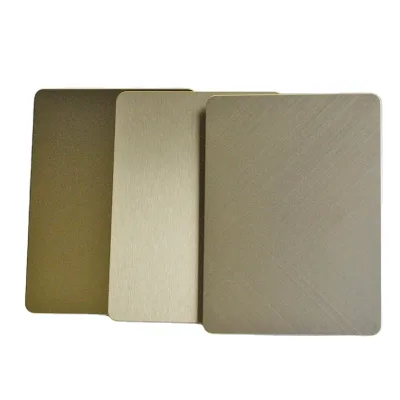
When sourcing decorative hairline stainless steel sheets, buyers must first establish a clear understanding of the technical parameters that define the product's quality and suitability for specific projects. The core attribute of this material is its surface finish, often described as a "hairline" or "brushed" texture. This finish is achieved through a cold-rolling process, which provides a uniform, directional grain that is both aesthetically pleasing and practical for interior applications. The product is primarily categorized as a stainless steel sheet, available in various grades ranging from the 200 Series to the more corrosion-resistant 300 Series. The selection between these grades depends heavily on the environmental conditions of the intended application, with 300 Series generally preferred for high-moisture or corrosive environments.
Thickness is a critical specification that directly influences the rigidity and visual impact of the sheet. Market observations indicate a standard thickness range of 0.3 mm to 3.0 mm, with some suppliers offering customized thicknesses to meet specific structural or design requirements. Buyers should note that tolerances are a vital component of quality control; observed tolerances for thickness can range from tight limits of +/-0.03 mm to broader allowances of +/-0.09 mm depending on the manufacturing precision and the specific grade selected. A tighter tolerance is often necessary for high-precision architectural cladding where panel gaps must be uniform, whereas broader tolerances may be acceptable for general decorative paneling.
The dimensions of the sheets are equally important for logistics and installation planning. Standard sheet sizes commonly observed include 1000 mm x 2000 mm, 1219 mm x 2438 mm, and 1219 mm x 3048 mm. While these standard dimensions facilitate efficient cutting and handling, many manufacturers offer customized sizing to minimize waste during the fabrication process. The shape is consistently flat, though embossed variants are also available for specific textural effects. For decorative applications, the surface treatment often involves polishing to enhance the luster of the hairline finish, ensuring a consistent visual appeal across large installations.
Compliance, Certification, and Material Standards
Verifying compliance with international standards is a non-negotiable step in the procurement of stainless steel sheets. The material must adhere to recognized industry standards to ensure consistency in chemical composition, mechanical properties, and surface quality. The most frequently cited standards for this product include AISI, ASTM, DIN, EN, GB, JIS, and ISO. These standards provide a framework for quality assurance, ensuring that the steel meets specific requirements for tensile strength, yield strength, and corrosion resistance. For instance, the AISI and ASTM standards are widely accepted in North America and globally, while JIS and GB are prevalent in Asian markets. Buyers should explicitly request documentation confirming that the supplied sheets conform to the specific standard required for their project.
Certification plays a pivotal role in validating the quality and safety of the material. High-confidence data indicates that suppliers can provide test certificates, which serve as proof of the material's compliance with the stated specifications. These certificates often verify that the product meets ISO standards, and in some cases, specific regional or industry certifications such as IBR (Indian Boiler Regulation) or RoHS (Restriction of Hazardous Substances) may be applicable. The presence of an ISO certification suggests that the manufacturer adheres to a recognized quality management system, which is a strong indicator of process reliability.
Furthermore, the material grade must be clearly defined. While 200 Series and 300 Series are the primary categories observed, the specific alloy composition determines the material's performance characteristics. The 300 Series, for example, typically offers superior corrosion resistance compared to the 200 Series, making it more suitable for applications involving exposure to water or chemicals. Buyers should verify that the grade listed on the test certificate matches the grade ordered. Additionally, for applications involving specific industries such as boiler construction or shipbuilding, specialized certifications like IBR may be mandatory. It is essential to cross-reference the supplier's certification claims with the actual test reports provided, ensuring that the documentation is current and issued by an accredited body.
Cost Drivers and Pricing Dynamics
The pricing of decorative hairline stainless steel sheets is influenced by a complex interplay of factors, including raw material costs, processing complexity, and order volume. The base cost is heavily dependent on the stainless steel grade, with 300 Series materials generally commanding a higher price than 200 Series due to their superior corrosion resistance and nickel content. Surface treatments and coatings also significantly impact the final cost. Options such as color coating, which can include finishes like gold, rose gold, bronze, blue, or purple, add value but also increase the price. The thickness of the coating layer, ranging from 0 to 5 microns for standard coatings and up to 100 microns for specialized film coatings, is another variable that affects pricing.
Order quantity is a primary driver of unit cost. The Minimum Order Quantity (MOQ) observed in the market ranges from 1 sheet to 50 sheets, with many suppliers setting a standard MOQ of 10 sheets. Larger orders typically benefit from economies of scale, resulting in a lower price per unit. Conversely, small orders or custom-sized sheets may incur higher costs due to the setup time and material waste associated with smaller production runs. Lead time is another factor that can influence pricing; standard delivery times of 7 to 15 days are common, but expedited shipping or rush orders may carry a premium.
Payment terms and delivery conditions also play a role in the total cost of ownership. Terms such as FOB (Free on Board), CIF (Cost, Insurance, and Freight), and CFR (Cost and Freight) determine who bears the risk and cost of transportation. Buyers should carefully evaluate these terms to understand the full cost implications, including insurance and freight charges. Additionally, the availability of stock can affect pricing; products held in stock may be priced differently compared to those requiring production lead time. It is advisable for buyers to request detailed quotes that break down the cost of the material, processing, and logistics to ensure transparency and avoid hidden fees.
Typical Applications and Design Considerations
Decorative hairline stainless steel sheets are versatile materials widely used in interior decoration and architectural applications. The primary application is in interior design, where the brushed finish adds a modern, sophisticated aesthetic to walls, ceilings, and partitions. The non-reflective nature of the hairline finish helps to minimize glare, making it ideal for commercial spaces such as hotels, lobbies, and retail stores. The material's durability and resistance to wear make it suitable for high-traffic areas, ensuring that the finish remains intact over time.
Beyond interior decoration, these sheets are also utilized in specialized industrial applications. The "Wear Resistant Steel" classification indicates suitability for environments subject to abrasion, such as machinery components or protective linings. Specific applications include boiler plates, container plates, flange plates, and ship plates, where the material must withstand harsh conditions. The ability to customize the surface treatment allows for the creation of unique design elements, such as embossed patterns or colored finishes, which can be tailored to specific brand identities or architectural themes.
When selecting the appropriate sheet for a project, buyers should consider the specific environmental conditions. For instance, in humid or coastal environments, the 300 Series with its enhanced corrosion resistance is preferred. In contrast, for dry interior environments, the 200 Series may be sufficient and more cost-effective. The thickness of the sheet should also be matched to the structural requirements; thinner sheets (0.3 mm to 1.0 mm) are suitable for decorative cladding, while thicker sheets (up to 3.0 mm) are necessary for structural components or heavy-duty applications. The lifespan of the product, often cited as more than 10 years, underscores its long-term value, provided it is installed and maintained correctly.
Supplier Evaluation and Quality Control Protocols
Evaluating potential suppliers requires a rigorous assessment of their production capabilities, quality control systems, and track record. Buyers should verify the manufacturer's production capability, which can range from 10,000 sheets per month for large-scale operations to smaller capacities for specialized workshops. A high production capacity often indicates a robust supply chain and the ability to handle large orders efficiently. Additionally, the supplier's ability to offer OEM (Original Equipment Manufacturer) and ODM (Original Design Manufacturer) services is crucial for projects requiring custom designs or branding.
Quality control is paramount in ensuring that the delivered products meet the specified standards. Buyers should inquire about the supplier's quality assurance processes, including in-line inspections and final testing. The availability of test certificates is a strong indicator of a supplier's commitment to quality. These certificates should detail the material composition, mechanical properties, and surface finish characteristics. It is also important to verify the supplier's adherence to international standards such as ISO, AISI, ASTM, and others. A supplier that can provide comprehensive documentation and has a history of compliance is more likely to deliver consistent quality.
Sample evaluation is another critical step in the supplier selection process. Most suppliers offer samples upon request, allowing buyers to physically inspect the material's finish, thickness, and overall quality before committing to a large order. Buyers should use these samples to verify the color accuracy, texture consistency, and dimensional tolerances. The packaging of the samples should also be examined to ensure that the material is protected during transit, as improper packaging can lead to damage. Additionally, the supplier's customer service and responsiveness to inquiries are important factors to consider, as they reflect the overall reliability of the business relationship.
Long-Term Procurement and Logistics Strategy
Establishing a long-term procurement strategy for decorative hairline stainless steel sheets involves careful planning of logistics, inventory management, and relationship building with suppliers. The delivery terms, such as FOB, CIF, or CFR, should be selected based on the buyer's logistical capabilities and risk tolerance. Understanding the lead time, which typically ranges from 7 to 15 days, is essential for project scheduling. Buyers should factor in potential delays due to customs clearance, shipping, or production bottlenecks, especially for custom orders.
Inventory management is another key consideration. Maintaining a stock of standard sizes and grades can help mitigate supply chain disruptions and ensure timely project completion. Some suppliers offer stock availability, which can be advantageous for urgent orders. However, for custom projects, buyers should plan ahead to accommodate the production lead time. The packaging of the sheets, often described as standard export sea-worthy packing or wooden pallets with waterproof paper, should be verified to ensure that the material arrives in pristine condition.
Building a strong relationship with a reliable supplier is crucial for long-term success. A supplier that offers flexible customization options, consistent quality, and responsive communication can be a valuable partner. Buyers should consider the supplier's market reach, with many operating globally, to ensure they can support international projects. Additionally, the supplier's ability to provide technical support and after-sales service can add significant value. By focusing on these long-term considerations, buyers can secure a steady supply of high-quality decorative hairline stainless steel sheets that meet their project requirements and budget constraints.
Comparative Analysis of Product Attributes
To facilitate informed decision-making, the following table summarizes key attributes of decorative hairline stainless steel sheets based on observed market data. This comparison highlights the variations in specifications, certifications, and processing options available to buyers.
| Attribute | Standard Range/Observation | Notes for Buyers |
|---|---|---|
| Material Grade | 200 Series, 300 Series | 300 Series offers better corrosion resistance; verify based on environment. |
| Thickness | 0.3 mm - 3.0 mm | Customized thickness available; check tolerance requirements. |
| Thickness Tolerance | +/-0.03 mm to +/-0.09 mm | Tighter tolerance for precision applications; verify in test reports. |
| Surface Finish | Hairline, Brushed, Polished, Embossed | Hairline is standard; embossed and colored options available. |
| Color Options | Gold, Rose Gold, Bronze, Blue, Purple, Black | Customized colors available; verify film thickness and brand. |
| Standard Compliance | AISI, ASTM, DIN, EN, GB, JIS, ISO | Ensure specific project standards are met; request certificates. |
| Certifications | ISO, IBR, RoHS, Test Certificate | Verify test certificates for material composition and properties. |
| MOQ | 1 to 50 Sheets (Commonly 10) | Negotiate MOQ based on project scale; stock items may have lower MOQ. |
| Delivery Time | 7-15 Days | Standard lead time; expedited options may incur extra costs. |
| Packaging | Standard Export, Wooden Pallet, Waterproof Paper | Ensure packaging prevents damage during sea freight. |
| Application | Interior Decoration, Boiler, Ship, Wear Resistant | Match grade and finish to specific application needs. |
| Lifespan | >10 Years | Dependent on environment and maintenance; 300 Series generally longer. |
This table serves as a reference for buyers to compare different product offerings and identify the specifications that best align with their project requirements. By carefully evaluating these attributes, buyers can make informed decisions that balance cost, quality, and performance.
FAQs
What certifications are available for decorative hairline stainless steel sheets?
Suppliers can provide test certificates confirming compliance with ISO, AISI, ASTM, DIN, GB, JIS, EN, and IBR standards. These documents verify material quality and ensure the sheets meet specific industry requirements for chemical composition and mechanical properties.
Can I get custom thickness and dimensions for these stainless steel sheets?
Yes, customization is available for thickness ranging from 0.3 to 3.0 mm and standard sizes like 1219x2438 mm. Buyers can request specific dimensions to minimize waste, with tolerances typically set at plus or minus 0.03 mm or 0.09 mm depending on the grade.
How long is the delivery time for orders of these decorative sheets?
The standard delivery time is between 7 to 15 days from the order date. This timeline applies to most stock items and custom orders, though expedited shipping options may vary based on the specific supplier's production capacity and current workload.
Which surface finishes and colors are offered for these stainless steel sheets?
Available finishes include hairline brushed, polished, and embossed textures with color coatings in gold, rose gold, bronze, blue, and purple. Film thickness can range from 50 to 100 microns using brands like Poli-Film or Nitto for enhanced durability and aesthetic appeal.
What is the minimum order quantity for purchasing these stainless steel sheets?
The minimum order quantity ranges from 1 to 50 sheets, with many suppliers setting a standard MOQ of 10 sheets. Smaller orders may incur higher unit costs due to setup time, while larger orders benefit from economies of scale and lower pricing.
Can samples be provided before placing a large order for these sheets?
Samples can be provided to allow buyers to inspect the finish, thickness, and color accuracy before committing to a bulk purchase. This ensures the material meets project requirements for texture and dimensional tolerances before the full production run begins.
Which stainless steel grades are available for these decorative sheets?
The product is available in 200 Series and 300 Series grades, with 300 Series offering superior corrosion resistance. The choice depends on the application environment, as 300 Series is preferred for high-moisture areas while 200 Series suits dry interior spaces.